Patina can give you goosebumps. Original paint feels like a certificate of authenticity on wheels. But let’s be honest: not every dull, cracked surface is “honourable.” Sometimes it is simply neglect – and that becomes expensive.
If you are a detailer, professional restorer or passionate enthusiast, you know the challenge: historic paint systems behave differently. They are often softer, more sensitive and highly responsive to correct care. This guide shows how to treat synthetic resin and nitrocellulose paints respectfully, preserve substance and create a finish that feels “original” – not over-restored.
Why Classic Car Paint Has Its Own Rules
Modern clear coats forgive many mistakes. Historic systems rarely do. Nitrocellulose paints are especially known for their sensitivity. Older synthetic resin paints age differently: they can dry out, appear dull, develop micro-scratches faster or react to aggressive chemicals with haze.
The essential mindset shift: it is not about “polishing everything away,” but about preserving material. Work too aggressively and you remove in minutes what decades have created.
- Preserve patina means restoring gloss and depth without erasing character.
- Stop neglect means gently removing oxidation, deposits and harmful residues.
- Protect originality means as mild as possible, as effective as necessary.
Inspect First: Your 5-Minute Paint Check
Before reaching for polish or wax, pause briefly. It saves hours and prevents risk.
- Feel the surface: Rough like sandpaper? Surface contamination may be present.
- Check in angled light: Milky haze or chalking indicates oxidation.
- Test sensitivity: In an inconspicuous area, work with a soft cloth and a mild cleaner. If the paint reacts quickly, proceed even more carefully.
- Consider history: Original paint, partial respray, blended repairs? Different areas may react differently.
- Define the goal: Show gloss or honest preservation? Both are possible – with different intensity.
Cleaner Instead of “Cut”: Gentle Preparation Is Key
On classic cars, preparation determines the result. A mild hand polish can achieve significant improvement without stressing the surface.
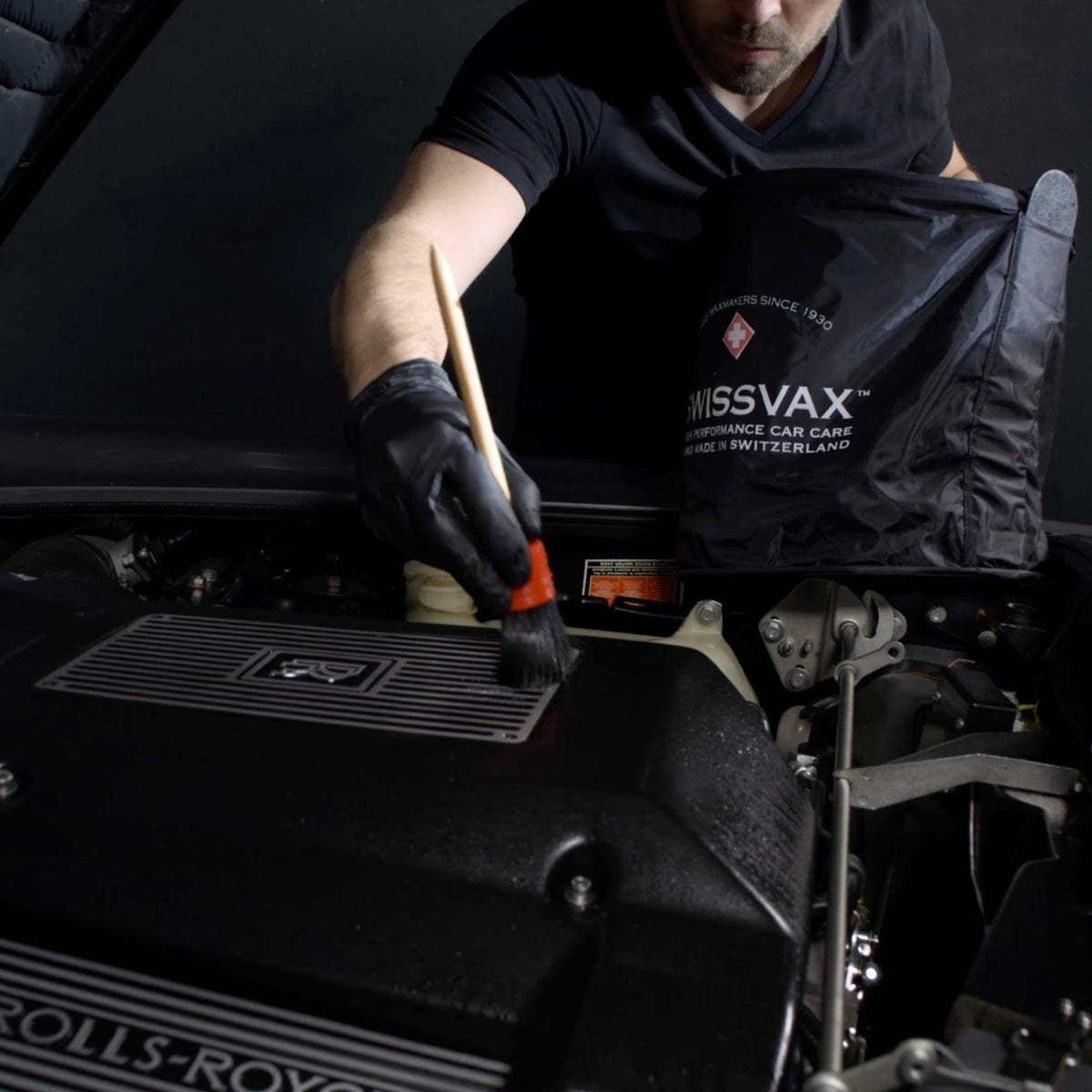
For regular, gentle pre-cleaning, SWISSVAX Hand Polish – especially Cleaner Fluid Regular – is recommended. It cleans and nourishes the paint without abrasives, removing light marks, resin, tar, old wax residues and chemical deposits. At the same time, it prepares the surface for optimal wax bonding.
How to Work with Cleaner Fluid Regular
- Hand application only: Use a soft applicator pad, minimal product, even strokes.
- No pressure: Let the formulation do the work.
- Small sections: 40 × 40 cm, then immediately buff with a soft microfiber cloth.
- Prefer two gentle passes instead of one aggressive attempt.
Professional tip: When preserving original finishes, deliberately work softly. The result often appears more authentic, with restored depth and saturation rather than an artificially flat gloss.
Sealing Synthetic Resin Paint: Warmth, Depth, Protection
Older synthetic resin paints benefit from a wax sealant that enhances gloss while forming a protective barrier against moisture, dirt and micro-scratches.
A classic choice is SWISSVAX 356 (40% Vol.). Developed for original finishes of vehicles such as the Porsche 356 or Mercedes-Benz 300SL, it combines 40 Vol.% Brazilian carnauba wax with extracts of vanilla and lemon oils.
Wax Application That Respects Historic Paint
- Apply very thin: Less is truly more.
- Buff gently: Fresh, soft microfiber – no rubbing.
- Layer carefully: Allow adequate curing time before adding a second layer.
The result delivers rich reflections without removing the vehicle’s historic character.
Nitrocellulose Paint: Sensitive, Rare, Beautiful
Nitro paints are considered by many the ultimate classic finish. They offer remarkable depth yet react quickly if treated too aggressively. This makes a tailored wax essential.
SWISSVAX NITRO (30% Vol.) was specifically developed for sensitive nitrocellulose paints, providing protection with a gentle deep gloss.
What Matters Most with Nitro
- Temperature and timing: Avoid direct sun or hot panels.
- Minimise mechanical stress: Nitro paints are often softer.
- Keep contact materials clean: Pads and cloths must be immaculate.
If buffing feels more like caressing the paint than working it, you are on the right track.
Patina vs. Neglect: The Real Difference
Patina is a look. Neglect is a process. The difference lies not only in appearance but in substance.
- Patina appears harmonious, evenly aged and maintained.
- Neglect feels dry, chalky, rough and often shows clear UV or chemical damage.
Your responsibility as owner or professional: preserve character, but stop deterioration. Gentle cleaning combined with the right wax stabilises condition without erasing history.
Bonus: Do Not Forget Interior Wood Trim
Many classics also live through their interior materials – wood, chrome, leather. Gloss-lacquered wood surfaces benefit from dedicated care.
SWISSVAX WOOD POLISH is a specialised wax for lacquered fine wood trim. It enhances depth and protects against new micro-scratches.
- Application: Thin and even by hand.
- Finish: Gently buff without pressure.
- Effect: Increased depth, reduced grey haze.
Quick Guide: Which Combination for Which Paint?
- Historic paint, regular maintenance: Cleaner Fluid Regular + suitable wax
- Older synthetic resin paint: Cleaner Fluid + 356 (40% Vol.)
- Sensitive nitrocellulose paint: Cleaner Fluid + NITRO (30% Vol.)
- Gloss lacquered interior wood: WOOD POLISH